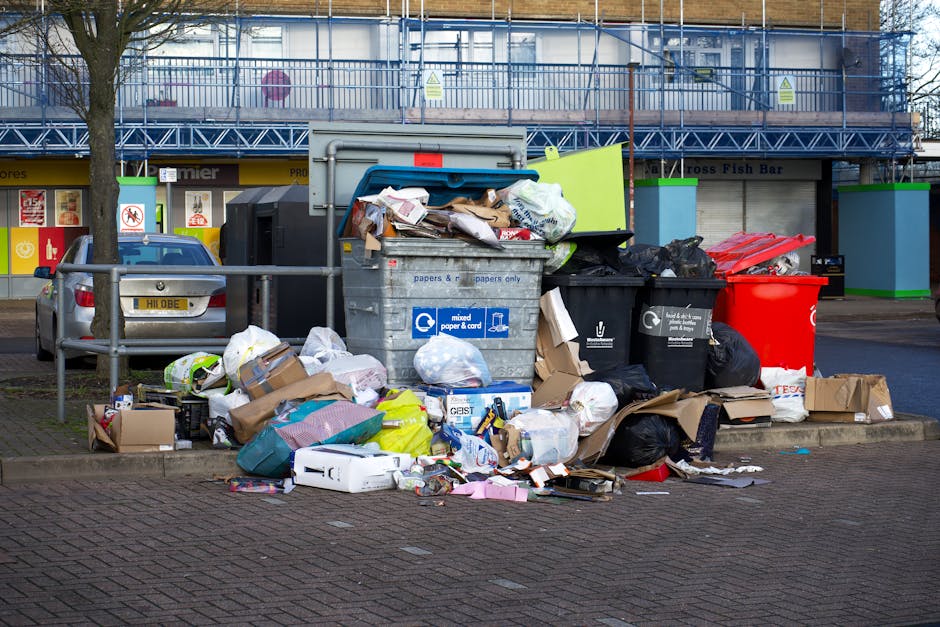
Hornsey High Street Rubbish Removal Guide for Fast Clearouts
If you need a Hornsey High Street rubbish removal guide for fast clearouts, you are probably dealing with one of those jobs that looks simple from the pavement and suddenly feels huge once you open the front door. A packed flat. A shop store room. A few broken pieces of furniture stacked near the stairs. Or maybe just a tight deadline and not enough time to mess about. This guide walks you through the practical side of clearing rubbish quickly on and around Hornsey High Street, without the fluff.
In real life, speed matters. So does doing the job properly. The best clearouts are not just fast; they are tidy, safe, and organised enough that you are not left with a second round of hassle. Below, you will find how rubbish removal usually works, what to expect, common mistakes to avoid, and how to decide whether a full clearance, targeted disposal, or a broader waste removal service is the right move.
Some jobs are genuinely straightforward. Others need a bit of thought. To be fair, that is usually where people save the most time.
Table of Contents
- Why Hornsey High Street rubbish removal guide for fast clearouts matters
- How Hornsey High Street rubbish removal guide for fast clearouts works
- Key benefits and practical advantages
- Who this is for and when it makes sense
- Step-by-step guidance
- Expert tips for better results
- Common mistakes to avoid
- Tools, resources and recommendations
- Law, compliance, standards, or best practice
- Options, methods, or comparison table
- Case study or real-world example
- Practical checklist
- Conclusion
- Frequently Asked Questions
Why Hornsey High Street rubbish removal guide for fast clearouts Matters
Hornsey High Street has the kind of everyday pressure that makes rubbish pile up quickly. Homes above shops, busy side streets, small business units, shared flats, storage rooms, and properties where space is at a premium. When waste starts building up, it does not just look messy. It gets in the way of opening doors, moving boxes, staging a room for sale, or simply getting your week back under control.
A fast clearout is not only about removing items. It is about restoring usable space with as little disruption as possible. That can mean helping a landlord between tenancies, clearing a back office before a refit, emptying a garage that has become a kind of accidental archive, or removing old furniture after a move. The point is movement. Progress. Breathing room.
If you wait too long, rubbish jobs become awkward jobs. Cardboard starts to collapse. Bags split. Old appliances become hazards. And the more clutter spreads, the harder it is to estimate what you actually need removed. That is why a local, practical approach matters. Fast clearouts work best when they are planned in a simple, realistic way.
Expert summary: The quickest rubbish removal jobs are usually the ones that are sorted before collection day, with waste grouped sensibly, access made easy, and special items identified early.
How Hornsey High Street rubbish removal guide for fast clearouts Works
Most rubbish removal jobs follow a similar pattern, even if the details change depending on the property. First comes the assessment. That may be a brief phone call, photos, or a walkthrough if the job is larger. The aim is to understand the volume, the type of waste, access issues, and whether anything needs special handling.
Then comes the planning stage. A good plan answers a few basic questions: what is going, how much there is, whether the team needs to carry items through stairs or narrow halls, and whether anything must be separated for safety or disposal reasons. On Hornsey High Street, access can be a real factor. Shared entrances, parking restrictions, and narrow loading areas can all affect timing. Not dramatically, but enough to matter.
After that, the clearance itself is usually quick. Items are removed, loaded, sorted where necessary, and taken away for appropriate disposal, reuse, or recycling. If you are clearing a single room, the process can feel almost surprisingly fast. If you are dealing with mixed waste from a renovation, the job takes a bit more handling, especially for heavy rubble or awkward items. For that kind of work, a builders waste clearance approach is often more suitable than a general tidy-up service.
The important bit is that the service should leave the space ready for the next step, not just empty. That might mean a cleaned-out flat, a cleared office, or a garage you can actually walk through again without turning sideways.
Key Benefits and Practical Advantages
There are some obvious benefits to fast rubbish removal, but the less obvious ones are often the most valuable. Yes, you save time. Yes, your property looks better. But you also reduce the friction that slows everything else down.
- Faster turnaround: Useful when you are preparing for tenants, viewings, deliveries, or tradespeople.
- Less physical strain: Heavy lifting, awkward furniture, and repeated trips down stairs are no joke.
- Better space planning: Once clutter is gone, you can see what actually needs to happen next.
- Safer rooms and corridors: Clear walkways matter, especially in shared buildings or busy households.
- Cleaner presentation: This matters in retail units, offices, flats, and homes alike.
- More flexible disposal: Different items can be handled in different ways, including specialist streams where needed.
There is also a mental benefit people do not always mention. A cluttered property can feel heavier than it should. Once the waste is gone, everything tends to feel more manageable. Slightly calmer, even. You notice the room again.
If you are moving on from an old sofa, broken bed frame, fridge, or appliance, specialist disposal can be a better fit than treating it as generic rubbish. You can look at options such as mattress and sofa disposal or fridge and appliance removal when the items are bulky or awkward.
Who This Is For and When It Makes Sense
This kind of guide is useful for a wide range of people, not just property managers or trades. In practice, the people who search for fast clearouts usually fall into a few everyday groups:
- Homeowners clearing out after a move, renovation, or long-overdue tidy-up.
- Tenants who need a property emptied properly before handover.
- Landlords and letting agents dealing with leave-behind items, mixed rubbish, or end-of-tenancy pressure.
- Local businesses clearing stock, packaging, old desks, or office clutter.
- Tradespeople who need post-job waste removed without slowing the next project.
- People sorting estates or inherited properties where the amount of stuff is larger than expected. That one can be emotionally loaded, truth be told.
The question is not just whether you have rubbish. It is whether you need the space back quickly and without complication. If that answer is yes, then professional clearance becomes a practical choice rather than a nice-to-have.
For example, a flat above a shop on a weekday morning is very different from a quiet house on a Sunday. The best service choice depends on time pressure, access, item type, and how much sorting you can do beforehand. A general home clearance may suit a broad domestic job, while a more focused flat clearance is often better for compact or access-heavy properties.
Step-by-Step Guidance
Here is the simplest way to handle a Hornsey High Street clearout without making it harder than it needs to be.
- Walk the space first. Do a quick room-by-room check and identify what is actually going. It sounds basic, but it prevents the classic "oh, that stays" moment later.
- Separate items by type. Put furniture, general waste, electricals, and any potentially hazardous materials into rough groups. You do not need museum-level organisation here. Just enough to avoid chaos.
- Measure bulky pieces. Door widths, stair turns, narrow hallways, and basement access can all matter. A sofa that looks easy in a living room can become a whole event by the front door.
- Flag awkward items early. Mattresses, fridges, old paint tins, broken screens, and anything chemical-based often need special handling.
- Clear the access route. Move bikes, plant pots, storage boxes, and small obstacles out of the way before the team arrives.
- Check parking or loading constraints. Hornsey High Street and the surrounding streets can be busy, so a smooth loading point helps more than people expect.
- Choose the right service scope. If you only have a few items, a small rubbish collection may do the trick. If you are emptying a room or several rooms, a more complete clearance is usually better.
- Book with enough detail. Photos, item lists, and access notes make quoting and arrival planning much easier.
- Keep essential items aside. It sounds obvious, but misplacing keys, paperwork, chargers, or keepsakes is the sort of mistake that causes avoidable stress.
- Ask about disposal routes. A proper service should be able to explain how materials will be handled, especially if you care about recycling or separation.
In my experience, the smoothest jobs are the ones where the customer spends ten minutes preparing and saves themselves an hour later. Not every time, but often enough to be worth it.
Expert Tips for Better Results
Fast clearouts are rarely about rushing. They are about removing friction. That is the difference.
Tip 1: Book the clearout before the deadline becomes urgent. It is tempting to wait until the room is completely unbearable. Then the stress kicks in, and every small delay feels larger. If you know a date is coming up, line up the clearance early.
Tip 2: Be honest about volume. Underestimating waste is one of the easiest ways to turn a quick job into a longer one. If you are unsure, describe the items plainly. "Two wardrobes, a mattress, and four black bags" is far more helpful than "a bit of junk."
Tip 3: Keep special waste separate. Hazardous items should not be mixed in with ordinary rubbish. For anything that may be chemical, sharp, or potentially harmful, use the appropriate route such as hazardous waste disposal.
Tip 4: Think in zones. Clear one room, then another. If everything gets dragged into the hall at once, the property can feel worse before it gets better. A little order goes a long way.
Tip 5: Use the job to simplify. If you are already clearing a loft, garage, or office, this is the moment to separate what can be reused, what should be removed, and what needs specialist disposal. The room rarely gets this much attention twice in a year.
Tip 6: Ask for transparency on sorting and recycling. Reputable providers should be open about their process. If sustainability matters to you, look at their recycling and sustainability approach before you book.
Common Mistakes to Avoid
There are a few recurring mistakes that slow clearouts down or make them more expensive than they need to be.
- Leaving sorting until collection day. You then lose time deciding what stays and what goes, which is exactly what you do not want.
- Forgetting access issues. Tight stairwells, no lift, awkward parking, or key handover problems can all delay a job.
- Mixing everything together. Furniture, rubble, electricals, and general waste are not always treated the same way.
- Ignoring specialist items. Fridges, appliances, and some furniture can require different handling.
- Assuming skip rules are flexible. They are not, really. If you are comparing routes, check what can go in a skip before you make a decision.
- Choosing speed without checking credibility. Fast is good. Reliable is better. Fast and unreliable is just a headache with a van.
The most annoying problems are often the smallest ones. A missing parking plan. A blocked hallway. One fridge hidden behind six bags of old paperwork. That sort of thing. Annoying, but fixable if you spot it early.
Tools, Resources and Recommendations
You do not need a truckload of equipment for a simple clearout, but a few basics help things move smoothly.
- Heavy-duty bags or boxes for small loose items.
- Marker pens and labels for rooms, categories, or keep/remove decisions.
- Measuring tape for furniture and access points.
- Gloves and sturdy footwear if you are moving anything yourself.
- Photo notes on your phone so you can show what needs removing if you are getting a quote.
On the service side, a few website pages can help you think through the job before you book. If you are clearing a workplace, office clearance is a useful fit. For mixed household items, house clearance is broader. If you are dealing with storage spaces or the sort of place where old paint tins and mystery boxes live, garage clearance or loft clearance may be more appropriate.
And if you want to understand pricing, timing, or what to expect from a quote, it is worth reading the pricing and quotes information before you commit. A clear quote is usually a sign of a clear process.
Law, Compliance, Standards, or Best Practice
For rubbish removal in the UK, the safest rule is simple: waste should be handled responsibly, by someone who understands the disposal route and the duty of care involved. You do not need to become a legal expert to book a clearout, but you do need to avoid casual dumping or handing waste to someone who cannot explain where it goes.
Best practice usually includes correct sorting, careful handling of electricals and bulky items, and appropriate treatment for anything that could be hazardous. For businesses, the bar is higher because records, customer information, and workplace safety all matter too. If confidential documents are involved, confidential shredding can be a sensible addition to a clearance plan.
Safety also matters on site. Moving heavy waste through shared entrances, staircases, or busy pavements requires care. That is why you should expect a provider to think about lifting, carrying, access, and general handling, not just the final load. A service with clear health and safety policy and insurance and safety information is generally easier to trust.
If your rubbish includes business materials, office storage, or ongoing commercial waste, the better match may be business waste removal. For domestic and mixed jobs, a general waste solution is often enough. The key is matching the method to the material. Simple, really.
Options, Methods, or Comparison Table
Different clearout methods suit different situations. Here is a straightforward comparison to help you decide.
| Method | Best for | Strengths | Watch-outs |
|---|---|---|---|
| General rubbish removal | Mixed household waste, small loads, quick turnaround | Fast, flexible, minimal hassle | Not ideal for specialist waste or large construction debris |
| House or home clearance | Full or partial domestic clearouts | Covers more item types, good for bigger jobs | May be more than you need for one or two items |
| Furniture clearance | Sofas, wardrobes, tables, beds | Useful for bulky items, quick room reset | Heavy items need access planning |
| Office clearance | Desks, chairs, filing, workplace clutter | Good for business moves or refurbishments | May involve confidential or mixed waste |
| Builders waste clearance | Renovation debris, rubble, offcuts | Handles post-work mess efficiently | Heavier loads may need more careful quoting |
| Skip-based removal | Projects with space for a skip and time to load it | Handy for ongoing DIY or site work | Needs space, permissions may apply, and not everything can go in it |
If you are stuck between options, ask yourself one question: do I need flexibility and speed, or do I need an ongoing container for a longer project? That usually reveals the answer quickly. Not always, but usually.
Case Study or Real-World Example
A typical Hornsey High Street clearout might look like this. A small flat over a shop needs to be emptied before new tenants move in. The place has a worn sofa, a mattress, a broken chest of drawers, some kitchen clutter, and a handful of bags from the previous occupier. There is no lift, the stairwell is narrow, and the front access is shared.
The useful part is that the job becomes much easier once the items are grouped in advance. The sofa and mattress are identified as bulky items. The drawers are checked for hidden contents. The bags are moved close to the entrance but not blocking the stairs. One phone call with clear photos is enough to confirm the scope.
On collection day, the team arrives, handles the heavy items first, and clears the rest in one pass. The flat ends up empty enough for cleaning and inspection, which means the next trade or tenant can move ahead without delay. Nothing glamorous about it. Just smooth, practical progress.
That kind of result is what people usually want when they search for fast clearouts. Not drama. Not uncertainty. Just a clear finish line.
Practical Checklist
Use this before you book or start a clearout.
- Have you listed everything that needs removing?
- Have you separated furniture, general waste, electricals, and special items?
- Have you measured anything bulky that may need help getting out?
- Is the access route clear?
- Have you thought about parking or loading space?
- Do you know whether any items need specialist disposal?
- Have you taken photos for a quote if needed?
- Have you kept valuables, documents, and essentials aside?
- Do you understand what will happen to recyclable items?
- Have you chosen the right service for the size and type of job?
That list is not meant to be fussy. It is just the difference between a job that feels chaotic and a job that feels oddly satisfying. And honestly, that feeling matters more than people admit.
Conclusion
A Hornsey High Street rubbish removal guide for fast clearouts should make one thing clear: the quickest jobs are the ones that are planned with a bit of common sense. Start with what is actually being removed, check access, keep special items separate, and choose the service type that matches the job rather than forcing everything into one box.
Whether you are clearing a flat, a shop back room, an office, a garage, or a full house, the right approach will save time and reduce stress. You do not need perfection. You just need a clean plan and a reliable finish.
Get a free quote today and see how much you can save.
If you are ready to move from clutter to clear space, take the next step with confidence. The job is often easier than it feels at the start, and once the first load is gone, the rest tends to follow. Bit of momentum goes a long way.
Frequently Asked Questions
How quickly can rubbish removal on Hornsey High Street usually be arranged?
It depends on the size of the job, access, and the type of waste, but many clearouts can be arranged quickly when details are clear. Photos and a simple item list help speed things up a lot.
What is the fastest way to clear a flat near Hornsey High Street?
The fastest approach is usually to separate bulky items, general waste, and any special items before the team arrives. That way, the clearance can start immediately instead of turning into a sorting exercise.
Do I need to move items outside before collection?
Not necessarily. In many cases, items can be collected from inside the property. That said, making access easy and clearing hallways will help the job run faster.
Can furniture and rubbish be taken in the same clearance?
Yes, often they can. Mixed loads are common. The main thing is that especially bulky pieces, electrical items, and any hazardous waste are identified early so they can be handled properly.
What should I do with a fridge or old appliance?
Fridges and appliances should be kept separate from general rubbish where possible. Specialist appliance removal is usually the cleaner and safer route, especially for heavy or awkward units.
Is a skip better than a rubbish removal service?
It depends on the job. A skip can suit longer DIY projects, but a removal service is often better when you want speed, lifting help, and less disruption. If you are unsure, compare the waste type and how much space you have.
How do I know if my waste is classed as hazardous?
If it includes chemicals, paints, certain cleaning products, sharp contaminated materials, or other potentially harmful items, it may need special handling. When in doubt, keep it separate and ask before collection.
Can business rubbish be cleared from an office near Hornsey High Street?
Yes. Office clearouts are common, especially during refits, moves, and downsizing. If paperwork or records are involved, confidential shredding is worth considering too.
Will the rubbish be recycled?
That depends on the material mix and the provider's process, but a responsible service should aim to separate recyclable items where practical. If sustainability matters to you, ask about the recycling approach upfront.
What happens if I underestimate the amount of rubbish?
It is best to be honest if you are unsure. Underestimating can lead to extra time or an adjusted quote, so photos and clear descriptions are the safest way to avoid surprises.
Are there any items that need special care during a clearance?
Yes. Mattresses, sofas, fridges, appliances, and hazardous items often need different handling from general rubbish. It is better to flag them early than try to bundle everything together.
What if I need a complete house clearout rather than just rubbish removal?
If the job is broader than waste alone, a full house clearance or furniture clearance may be a better fit. That usually gives you a cleaner, more efficient result.